
The google verified badge is now reshaping how local service providers win customers. Businesses without this green checkmark are losing high value leads to verified competitors daily. Google’s verification system for Local Service Ads has become the trust signal customers actively search for before booking any home service, contractor, or wellness provider. Here’s your complete guide to getting verified and using this badge to dramatically increase your customer base in 2025.
Understanding the Google Verified Badge
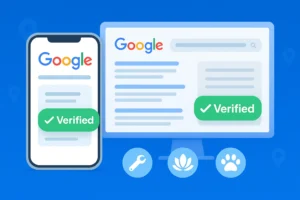
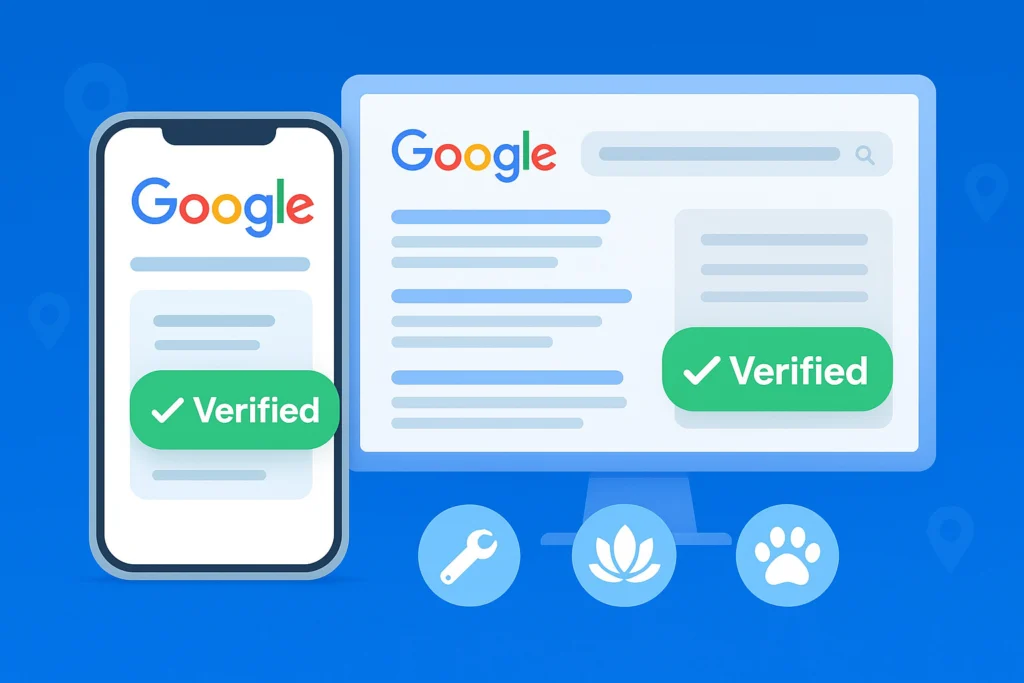
The google verified badge appears on Local Service Ads after Google confirms your business meets strict licensing, insurance, and background check requirements. Unlike the blue “Google Screened” badge for professional services, the green “Google Verified” badge applies to home services, wellness providers, and contractors. It tells potential customers that Google has vetted your business credentials, not just your payment information.
This verification process involves submitting business documents, passing background checks for all employees who visit customer homes, and maintaining proper insurance coverage. The badge appears prominently in search results, on your Business Profile, and throughout Google Maps.
Why the Google Verified Badge Matters for Your Revenue
Getting google verified badge isn’t just about a badge. It directly affects how Google ranks your Local Service Ads and how customers perceive your credibility.
Trust converts to revenue. Research from BrightLocal shows 87% of consumers read online reviews and trust signals before choosing a local business. The Google Verified badge serves as an instant credibility marker that replaces hours of customer research.
Ad placement improves automatically. Google prioritizes verified businesses in Local Service Ad rankings, meaning you appear higher in results even if competitors bid more. One plumbing company in Austin reported a 43% increase in ad impressions within two weeks of verification.
Cost per lead drops significantly. When customers trust your business before clicking, they’re more likely to convert. Verified businesses report 23 to 35% lower cost per acquisition compared to non-verified competitors in the same markets.
What Changed in Google's Verification System
Google rolled out major updates to Local Service Ads verification in late 2024 and early 2025. These changes affect who can advertise, how verification works, and what customers see.
Previously, basic business registration was enough to run Local Service Ads in many categories. Now Google requires comprehensive verification including background checks on all field employees, not just business owners. The screening process also expanded to include continuous monitoring instead of one time checks.
The visual badge itself got an upgrade. The new green “Verified” badge is larger and appears with more prominence in mobile search results, where most local searches happen. Google also added verification status to the business knowledge panel and Google Maps listings.
Perhaps most importantly, unverified businesses in many service categories can no longer run Local Service Ads at all. If you’re in home services, pet care, wellness, or contractor categories, verification moved from optional to mandatory between January and March 2025.
As customer search behavior evolves toward natural language queries like ‘who’s a trustworthy plumber near me,’ understanding how people actually search has become critical for local businesses.
How to Get Your Business Verified
The verification process takes between 5 to 14 business days if you have all documents ready. Here’s exactly what you need to do.
Gather Required Documentation First
Before starting your application, collect your business license, insurance certificates, and employee information. You’ll need a current general liability insurance policy with minimum coverage of $1 million per occurrence. Some categories like electrical or plumbing require additional professional liability coverage.
Take clear photos or scans of all licenses. Make sure they’re not expired and that the business name matches exactly across all documents. Mismatches cause the most common verification delays.
Complete Background Checks for Your Team
Every employee who visits customer locations must pass a criminal background check. This includes contractors and part time workers, not just full time staff. The process costs between $25 to $50 per person and takes 3 to 7 business days.
Google partners with Pinkerton for these background checks. You’ll receive an email with instructions for each team member to submit their information securely. Keep in mind that certain convictions automatically disqualify individuals from verification.
Submit Your Application Through Google's Portal
Log into your Local Service Ads dashboard and navigate to the verification section. Upload all documents in the required formats (JPEG or PDF under 5MB each). Double check that image quality is clear because blurry documents get rejected.
After submission, you’ll receive email updates as Google reviews each component. Response times vary by category, with high demand services like HVAC and plumbing taking slightly longer during peak seasons.
Set Up Continuous Monitoring
Once you earn your google verified badge, your work isn’t finished. Google now requires ongoing compliance monitoring. This means you must update any license renewals, insurance policy changes, or new employee background checks within 30 days. Failure to maintain current documentation results in badge removal and ad suspension.
Set calendar reminders for all expiration dates. Many businesses assign one person as the verification coordinator to manage renewals proactively.
Requirements Vary by Business Category
Not all service categories have identical verification standards. Here’s what applies to the most common business types.
Home Service Contractors
Electricians, plumbers, HVAC technicians, and general contractors face the strictest requirements. You need state or local trade licenses, workers compensation insurance, and background checks on every technician. Some states require additional bonding documentation.
Wellness and Personal Care
Massage therapists, personal trainers, and home health aides must provide professional certifications and background checks. Medical malpractice insurance is required for health related services. These categories added employee vaccination records as a requirement in some regions.
Pet Care and Animal Services
Dog walkers, pet sitters, and mobile grooming services need background checks and animal care certifications where applicable. Liability insurance specific to animal care is mandatory. Some states require additional licensing for overnight pet boarding.
Converting Your Badge Into More Customers
Having the badge means nothing if you don’t showcase it strategically. Here’s how verified businesses are maximizing their advantage.
Feature it on every customer touchpoint. Add the Google Verified badge to your website header, email signatures, invoices, and vehicle wraps. One landscaping company increased phone inquiries by 31% simply by adding badge graphics to their homepage hero section.
Respond to reviews mentioning verification. When customers leave reviews praising your professionalism, respond by thanking them and mentioning your Google Verified status. This reinforces the trust factor for future readers scanning reviews before booking.
Use it in your Local Service Ads copy. While Google displays your badge automatically, reference your verification in ad descriptions. Phrases like “fully verified and background checked team” or “Google Verified for your peace of mind” increase click through rates.
Train your team to mention it during sales calls. When quoting jobs, have your staff mention that your company is Google Verified. This addresses customer concerns about legitimacy before they even ask.
Compare yourself to unverified competitors. In competitive markets, politely educate customers about the difference between verified and non verified service providers. Create comparison content showing what verification requires.
Highlight it in follow up communications. Include verification status in appointment confirmations and follow up emails. This reduces no shows because customers feel more confident about your legitimacy.
The search landscape is changing rapidly, with AI platforms like ChatGPT now serving 400 million weekly users who ask detailed questions about local services.
Managing Your Verification Long Term
Maintaining verified status requires ongoing attention. Here are systems successful businesses use to stay compliant.
Create a verification calendar tracking all expiration dates for licenses, insurance policies, and background checks. Build in 60 day advance reminders so you have time to renew before expiration. One missed renewal can suspend your ads immediately.
Assign clear ownership of verification management. In small businesses, the owner typically handles this. Larger companies designate an operations manager or HR person to coordinate renewals and new employee screenings.
Budget for annual verification costs including insurance premiums, license renewals, and new employee background checks. Factor these as a percentage of your Local Service Ads budget, typically 3 to 7% of annual ad spend.
Mistakes That Cost Businesses Their Verification
Even verified businesses lose their badges through preventable errors. Avoid these common pitfalls.
Letting insurance lapse even briefly. One day of lapsed coverage triggers automatic verification removal. Set up automatic payment for insurance and request confirmation emails when policies renew.
Hiring workers before completing background checks. Some businesses send new employees to jobs before their background check clears. This violates Google’s terms and can result in permanent verification loss.
Using old screenshots of licenses. When licenses renew with new numbers or dates, update your Google documentation immediately. Using outdated documents appears as falsification.
Ignoring Google’s verification emails. Google sends compliance reminders and renewal requests. If you miss these communications, your verification lapses automatically after 30 days.
Operating under different business names. Your Google Business Profile name, legal business name, and license names must match exactly. Variations cause verification failures.
Cost Analysis: Is Verification Worth the Investment?
Let’s break down the actual numbers to help you make an informed decision.
Initial verification costs range from $300 to $800 depending on your business size and category. This includes background checks at $25 to $50 per employee, document preparation, and potentially hiring a compliance consultant for complex licensing situations.
Annual maintenance costs typically run $150 to $400 per year for license renewals and insurance updates. Businesses with high employee turnover pay more due to frequent background checks.
However, the ROI data strongly favors verification. Verified businesses report average increases of 40 to 65% in Local Service Ad lead volume. Their conversion rates improve by 15 to 25% because customers pre qualify themselves through the trust signal.
One real example: A Denver HVAC company spent $520 on initial verification and $240 annually on maintenance. Their monthly Local Service Ads leads increased from 18 to 31, with similar ad spend. At their $175 average job value and 60% close rate, verification generated an additional $13,650 in first year revenue.
Platform Strategies for Different Business Goals
Your verification works differently depending on what you’re trying to accomplish. Here’s how to optimize for specific outcomes.
Maximizing Lead Volume
If raw lead quantity is your priority, verification opens the door to broader keyword targeting. Once verified, experiment with adjacent service keywords you previously avoided due to competition. Your badge gives you an advantage in these crowded spaces.
Combine your verified status with extended business hours in your Local Service Ads settings. Google shows verified businesses with evening and weekend availability more prominently.
Improving Lead Quality Over Quantity
Higher quality leads come from customers who do research. These searchers actively look for trust signals like verification badges. To attract them, enable message leads in addition to phone calls. Verified businesses receive more detailed initial inquiries through messages.
Also set your Local Service Ads budget to focus on specific high value services rather than spreading across all offerings. Verified status means you can compete in premium service tiers where customers are less price sensitive.
Beyond traditional search, customers are also researching local businesses on social platforms that function as modern search engines.
Building Long Term Brand Reputation
Use verification as a foundation for broader trust building. Request video testimonials from customers who specifically mention feeling secure because of your Google Verified status. These testimonials work across all marketing channels.
Register for additional industry certifications beyond Google’s requirements. Stack credentials create comprehensive trust. For example, a verified electrician who also displays BBB Accreditation and state master electrician certification builds exceptional credibility.
Entering New Service Areas
When expanding geographically, your google verified badge transfers to new locations automatically as long as your licenses cover those areas. This gives you immediate credibility in markets where you lack brand recognition.
Before launching in a new city, verify your licensing covers that jurisdiction. Some states have county specific requirements that affect your badge status in certain ZIP codes.
What This Means for Your Business in 2025
The google verified badge has moved from competitive advantage to baseline requirement. Customers increasingly filter out non verified service providers entirely, especially for in home services where safety concerns are paramount.
If you haven’t started verification yet, prioritize it immediately. The process takes less time than you expect, and the lead quality improvement justifies the cost within the first month for most businesses. Start by gathering your documentation today rather than delaying until you see competitor advantages grow.
Frequently Asked Questions
Most businesses receive verification within 7 to 10 business days after submitting complete documentation. Background checks typically take 3 to 5 days. Complex licensing situations or multi state operations may extend the timeline to 3 weeks. You can check status anytime in your Local Service Ads dashboard under the verification section.
Yes, verification requires ongoing compliance. Common reasons for badge loss include expired licenses, lapsed insurance, new employees without background checks, or policy violations like asking customers to revise reviews. Most suspensions can be resolved by updating documentation, but serious violations may result in permanent removal.
This depends on your business category. In mandatory verification categories like home services and contractors, you cannot run ads until verified. Professional services categories still allow "Google Screened" status which has lighter requirements and lets you advertise during the full verification process.
Individual employee failures don't affect your business verification as long as that employee doesn't perform customer visits. You can maintain verified status with a mix of background cleared and non cleared staff, but only cleared employees can go to job sites. Document your internal policy showing how you restrict uncleared workers from customer contact.
No, verification is one of many ranking factors. Google also considers your review rating, response time, proximity to the searcher, and ad relevance. However, verification significantly improves your ranking compared to identical businesses without badges. Think of it as a prerequisite for competitive ranking rather than an automatic top placement.
Yes, these are separate badges for different business types. Google Screened applies to professional services like lawyers, financial planners, and real estate agents with simpler verification requirements. Google Verified applies to home services, contractors, and wellness providers with stricter standards including field employee background checks and trade licensing.